About
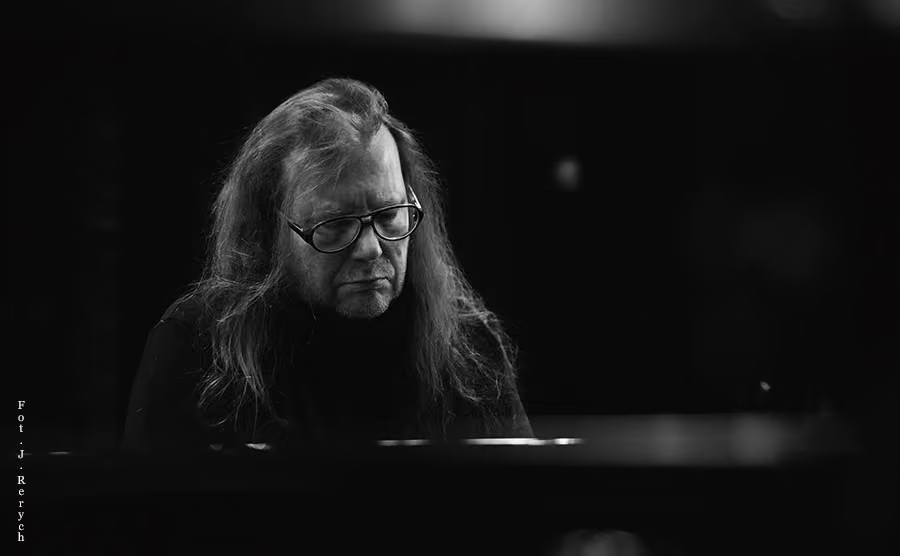
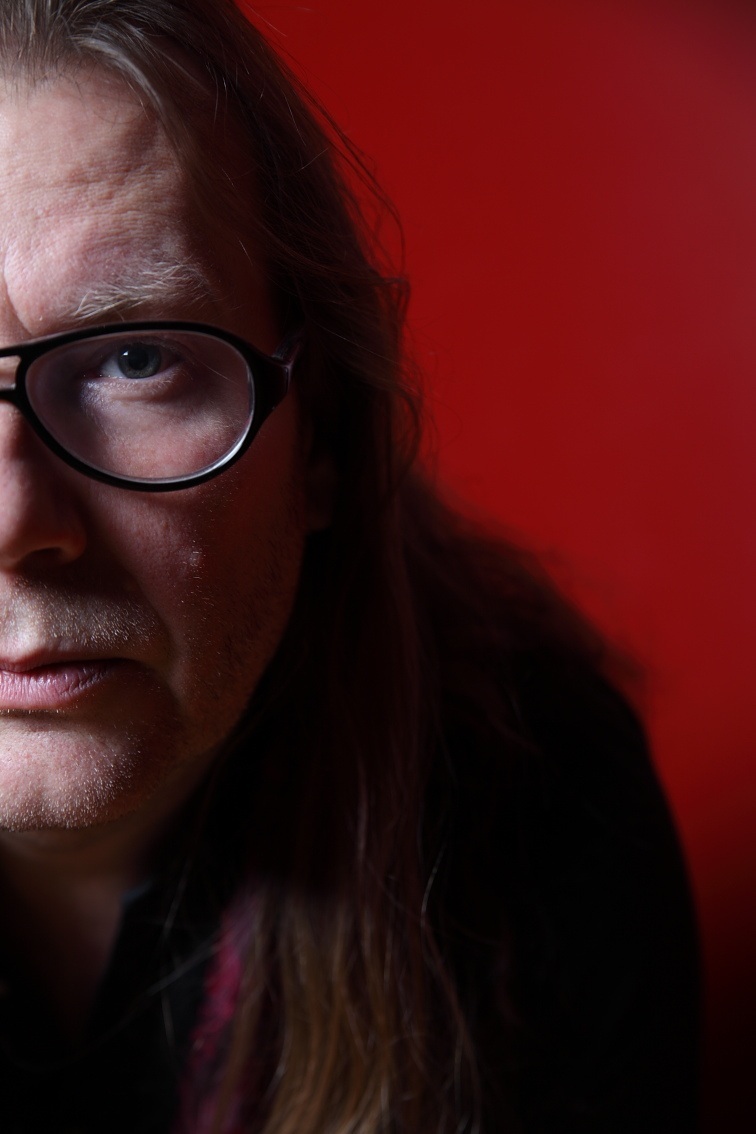
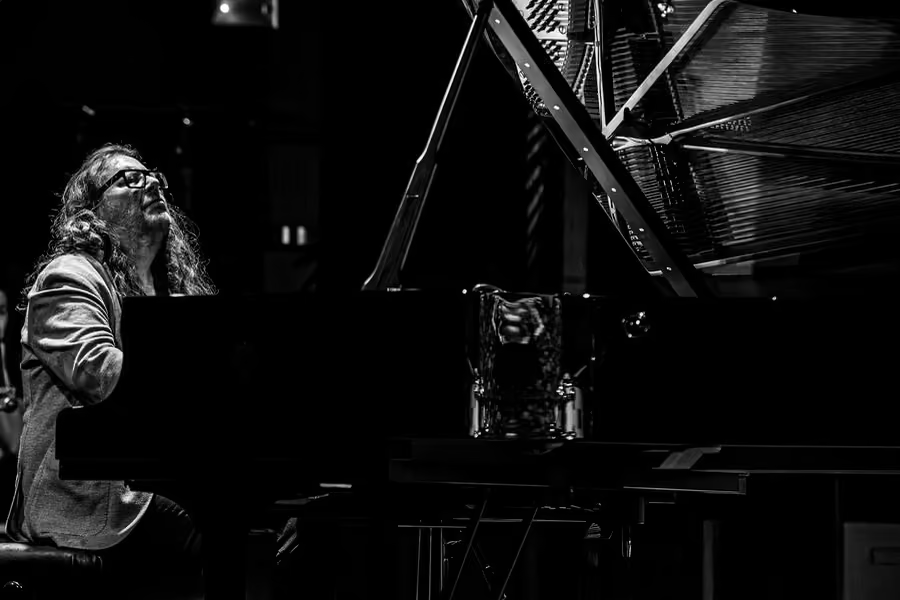
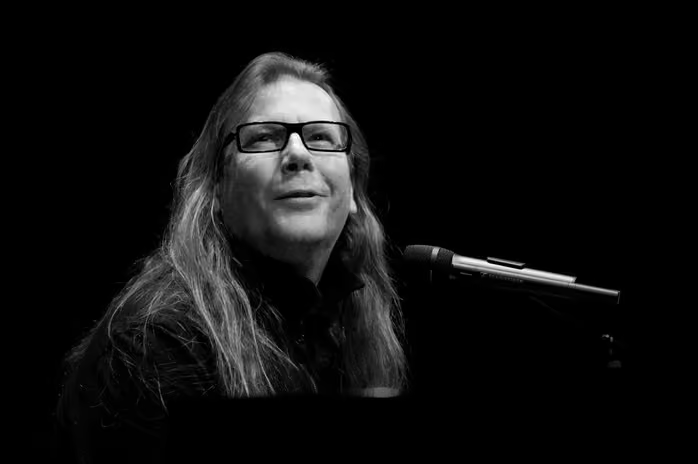
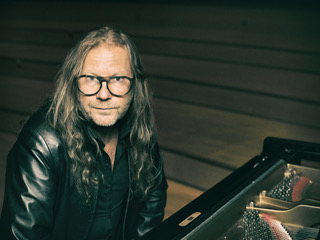
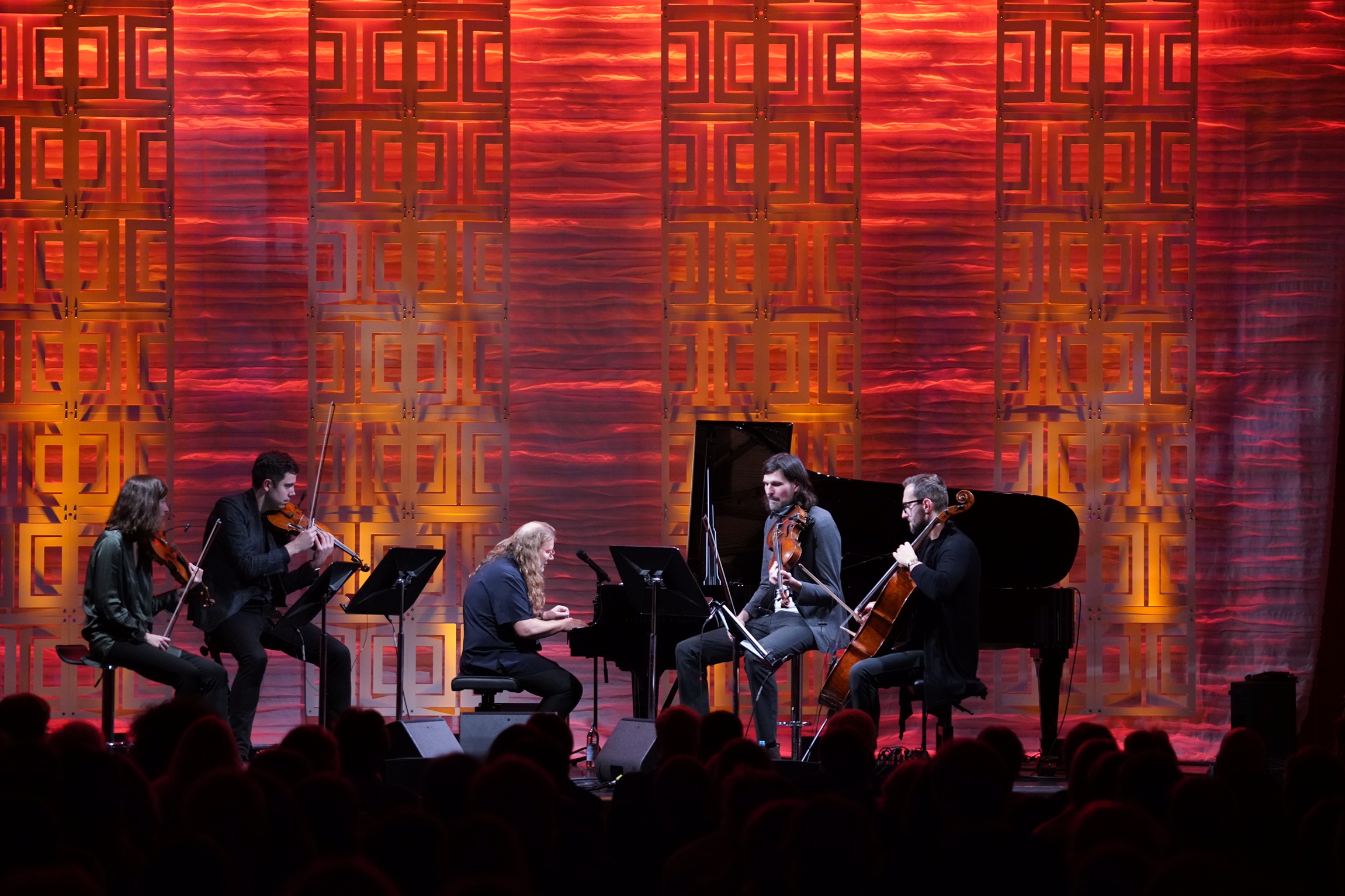
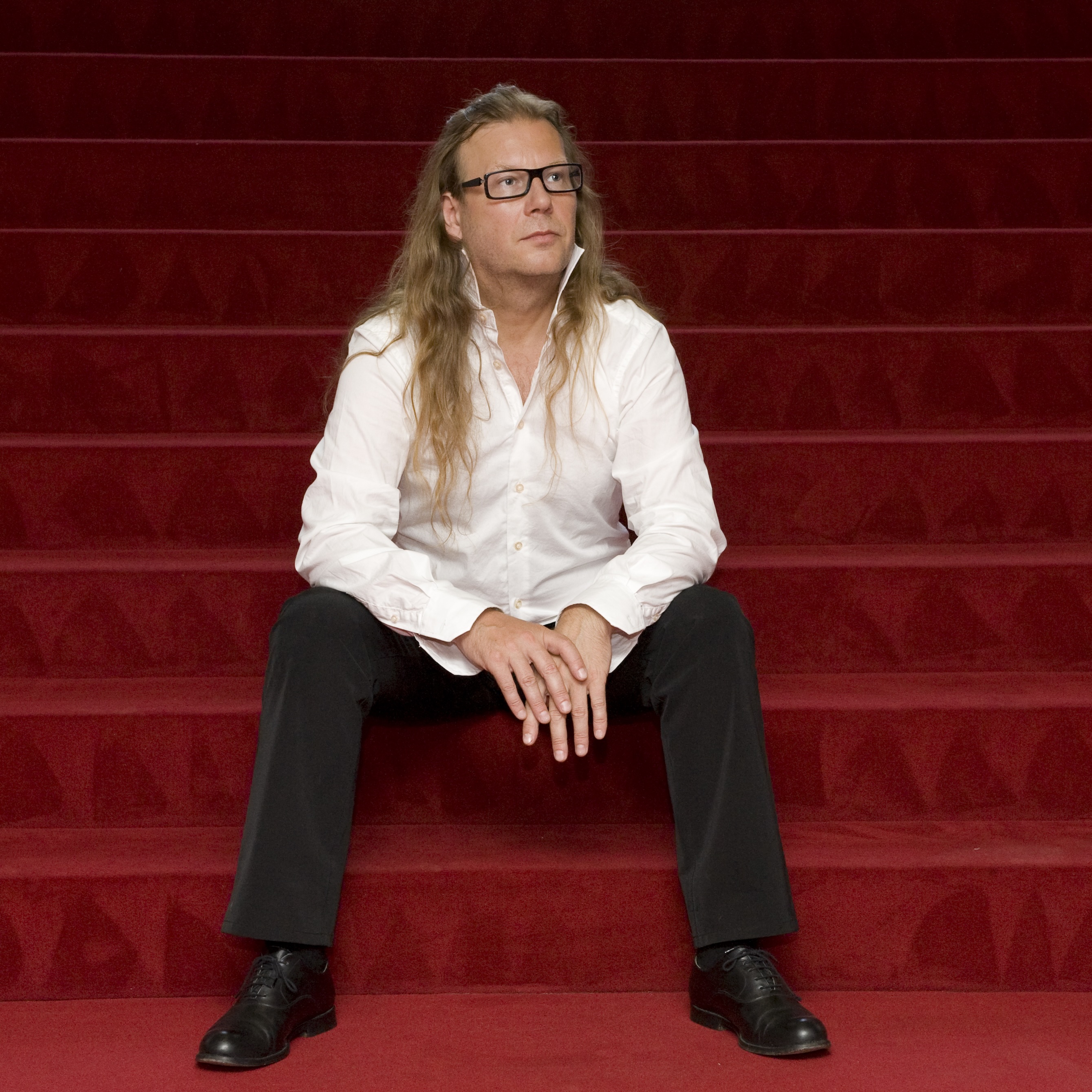
Vladyslav "Adzik" Sendecki belongs to that rare category of musicians whose playing is instantly recognizable. A few chords, an unexpected harmonic turn, a sudden burst across the keyboard—and you immediately know who is sitting at the piano. His music often feels as though it is being created in the very moment of performance, as if it were discovered rather than composed.
Born in 1955 in Gorlice, southern Poland, Sendecki grew up in an environment where music was more than education—it was a language. Classical training provided the foundation: technique, discipline, and a refined sense of sound. Yet from an early age he was drawn to a different kind of freedom—the freedom of jazz. During the 1970s he became a leading voice in the Polish jazz-fusion scene with the legendary group Extra Ball and later Sun Ship ,where he developed a musical language that has always resisted easy categorization.
A special artistic experience was collaborating with Zbigniew Namysłowski or Tomasz Stanko.
The political upheavals of the early 1980s eventually brought him to Western Europe, a move that transformed his artistic life. An international world opened before him: festivals, recording studios, and collaborations with musicians from across the globe.
Over the following decades, Sendecki worked with many of jazz's most celebrated artists, including
Billy Cobham, Joe Henderson, Bobby McFerrin, Al Jarreau, Michael and Randy Brecker, Nils Peter Molvaer, Wolfgang Haffner, Nils Landgren, Jaco Pastorius, Art Farmer, Jojo Meyer, Harry Sokal, Leszek Żądło, Lenny White, Buster Williams, Marcus Miller, Victor Bailey, Michał Urbaniak and many others. Yet he has never been merely an accompanist. His playing possesses a distinctive narrative presence that shapes every musical encounter.
A defining chapter began in the mid-1990s in Hamburg, when Sendecki became the pianist of the NDR Big Band.
For more than two decades he helped shape the sound of one of Europe's leading jazz orchestras. In this role another dimension of his artistry emerged: that of an architect of musical landscapes, a pianist who thinks orchestrally while preserving the spontaneity and freedom of improvisation.
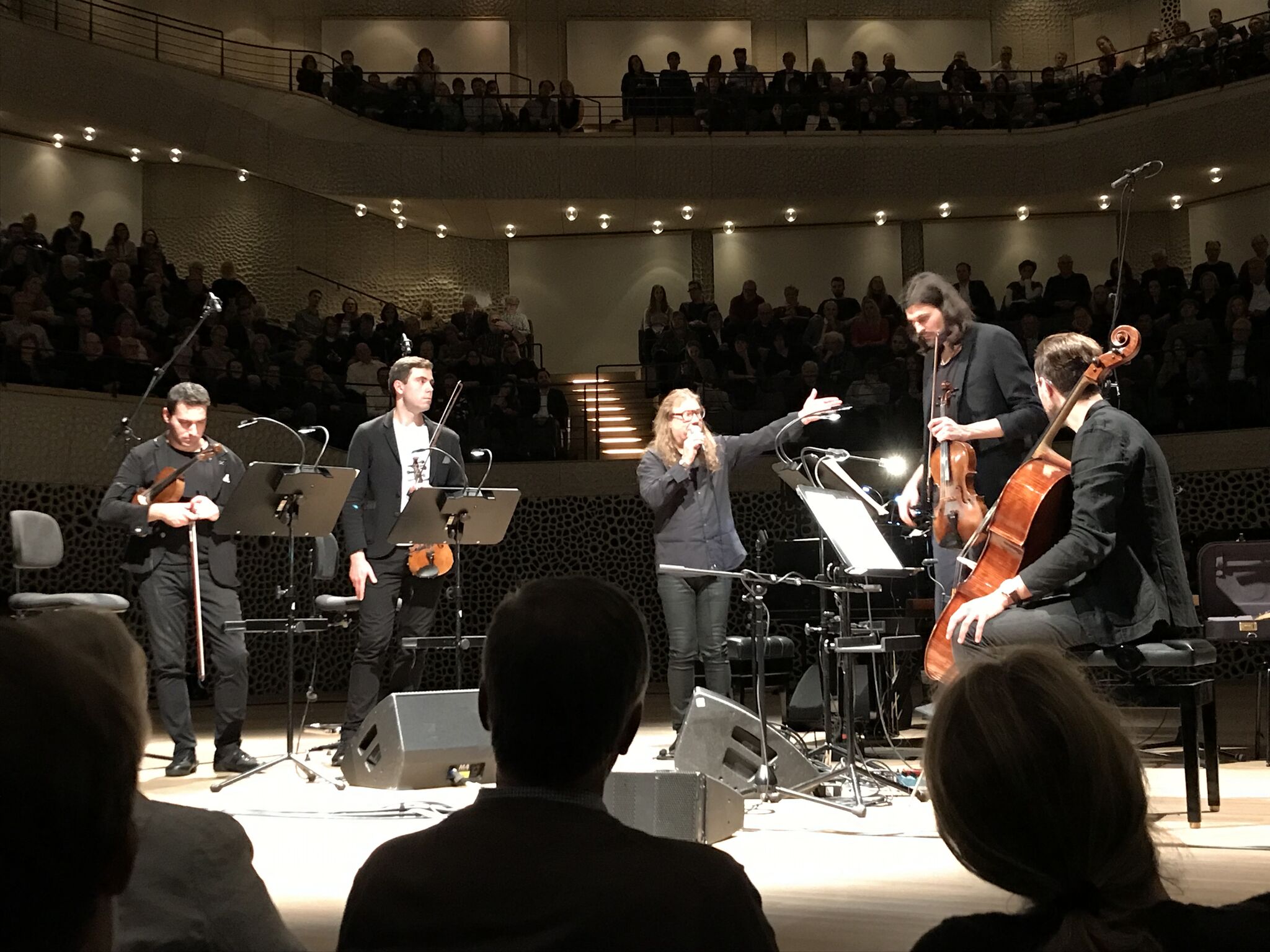
What fascinates critics and audiences alike is the combination of breathtaking virtuosity and poetic unpredictability. His playing can be powerful, rhythmically charged, and almost percussive, only to become lyrical, transparent, and chamber-like in the next moment. It is often described as orchestral, because Sendecki treats the piano not simply as a solo instrument, but as an entire ensemble in miniature.
Perhaps his greatest gift, however, lies in something more difficult to define: the ability to tell stories without words. His improvisations rarely feel like displays of technical brilliance. Instead, they unfold as musical journeys—sometimes dramatic, sometimes playful, always deeply expressive, and often unexpectedly moving.
Today, Vladyslav Sendecki represents a generation of European jazz musicians who have never felt compelled to choose between tradition and innovation. In his music, the spirit of Chopin, jazz fusion, free improvisation, and orchestral imagination coexist naturally. From these diverse influences emerges a musical voice that is at once deeply personal and unmistakably universal.
Perhaps this is why fellow musicians and critics alike continue to describe him as an artist who does more than play the piano—he creates an entirely original musical world.
Step into a world where jazz, classical, and contemporary melodies come alive. Here, every note tells a story—one shaped by passion, curiosity, and a love for sharing music with others.